










 May 06, 2026
  Wu Zhongyi was a model of loyalty


Question 1: Why is it 4.0?
First, let's review the main features of the previous industrial revolutions.
1.0: The first industrial revolution in Britain that began at the end of the 18th century and ended in the mid-19th century. The result of this Industrial Revolution was that mechanical production replaced manual labor, and the economy and society shifted from being based on agriculture and handicrafts to a model driven by industry and mechanical manufacturing.
2.0: The second major transformation in the industrial sector occurred in the early 20th century, marking the formation of production lines. By successfully separating component production from product assembly, a new model of mass production has been pioneered.
3.0: Since the 1970s, with the integration of electronic engineering and information technology into industrial processes, production optimization has been achieved. The Third Industrial Revolution began with the highly automated production processes that occurred during the Second Industrial Revolution. Since then, machines have gradually replaced human tasks.
4.0: In the next 10 years, Industry 4.0 will use network technology to determine production processes, enabling real-time automated management.
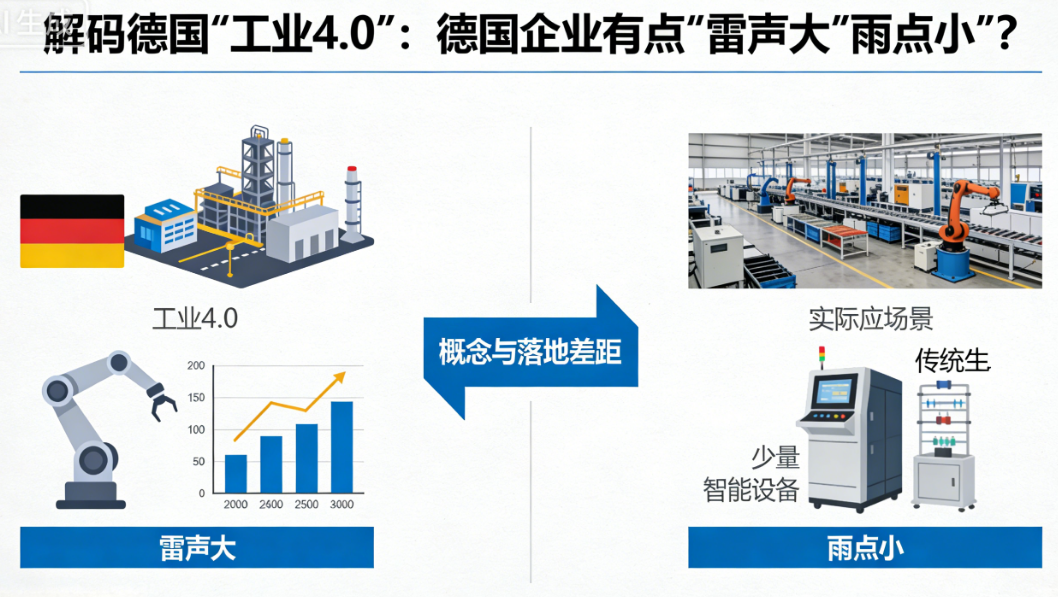
From this, we can see that compared to the difference between 1.0 and 2.0, or 2.0 and 3.0, the difference between 3.0 and 4.0 is actually not very obvious. Although Germany's Industry 4.0 report contains various definitions and explanations, However, I believe Industry 4.0 is nothing more than "factory intelligence."
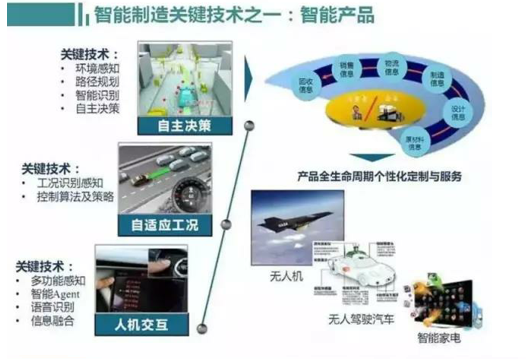
is like today's smartphones, equipped with various functions such as photography, video, connectivity, and other applications. Similarly, Industry 4.0 encompasses systems such as CRM (Customer Relationship Management), PDM (Production Data Management), SCM (Supply Chain Management), PLM (Product Lifecycle Management), CAD (Computer-Aided Design), as well as data processing, thereby aggregating and analyzing scattered information to decisively impact next-generation manufacturing processes.
Problem 2: What exactly can Industry 4.0 achieve?
Specifically, in the era of Industry 4.0, management systems such as CRM, PDM, and SCM may all be integrated in smart factories. As a result, the moment a customer order is received, the factory automatically purchases raw materials from suppliers. After the raw materials arrive, data is assigned: "These are raw materials for a certain process of a certain product produced for a certain customer," making the "raw materials" carry information. Raw materials with information also mean having their own uses or destinations. If, during production, when raw materials are mistakenly delivered to another production line, it will "communicate" with the production equipment and return to its own correct production line; If raw materials between production machines are insufficient, the machines can also "negotiate" with the order system to increase the quantity of raw materials; Ultimately, even after raw materials are embedded in the product, since they still retain process information, traceability and traceability become easy.
 Ningxia Wuzhong City Kaiyuan Avenue Jinji Industrial Park China Automation Industrial Park
Copy Right ? Wuzhong Instrument Co., Ltd. . All rights reserved Record Number:Ning ICP No. 16000574-3