










 May 06, 2026
  Feimaisen


two major development trends in intelligent manufacturing system solutions
According to industry experts, domestic intelligent manufacturing system solutions will face three major development trends in the future.
the first major trend: intelligent manufacturing is a systematic project, and collaboration in the field of system solutions will become more active.
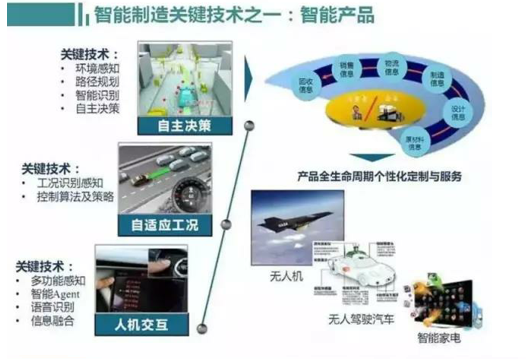
intelligent manufacturing development is complex and systematic, involving the entire product lifecycle including design, production, logistics, sales, and service, and involves executing enterprise system architectures such as the equipment layer, control layer, management layer, enterprise layer, cloud service layer, and network layer. It requires horizontal integration, vertical integration, and end-to-end integration. Due to insufficient capital investment, long R&D cycles, and process barriers, a single system solution provider finds it difficult to meet the intelligent manufacturing development needs of various niche industries. Enterprises will continuously strengthen collaborative innovation to enhance their ability to supply intelligent manufacturing system solutions.
The second major trend: intelligent manufacturing system architectures will be further improved, with integration and development in the industrial software field becoming a key focus.
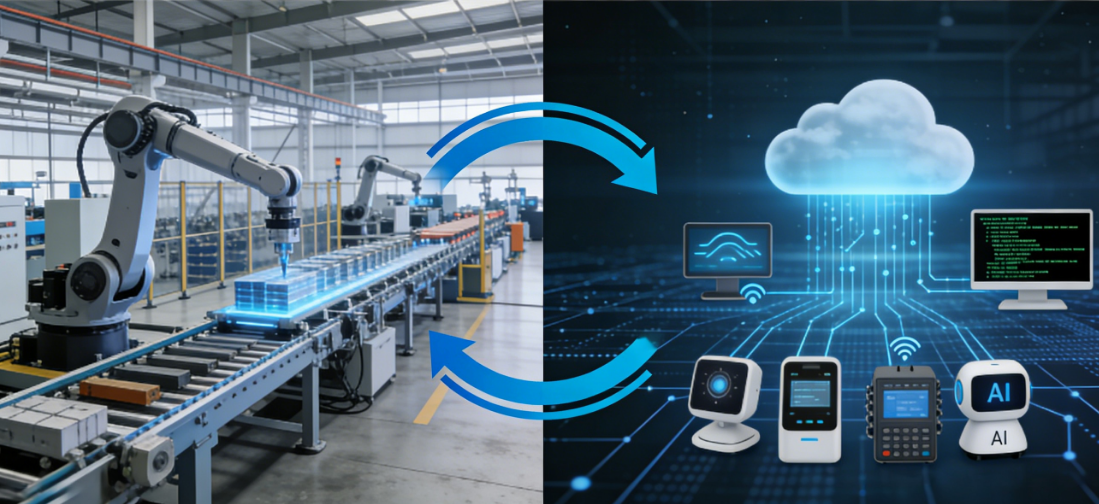
From the perspective of enterprise system architecture, there is currently no domestic intelligent manufacturing solution provider capable of integrating the entire architecture system, but as technology advances, system solution providers will keep improving their architecture. Intelligent manufacturing system solutions mainly rely on software and hardware products and systems to achieve mutual identification, real-time interaction, and information integration of manufacturing elements and resources. From the hardware perspective, due to the practical need for significant cost reduction, the highly versatile parts of hardware will increasingly develop in modularity and standardization. From a software perspective, industrial software exists in every corner of intelligent manufacturing. Intelligent manufacturing solutions will rely more on the integration and development of software components closely related to the hardware layer (SFC, MES, ERP, PLM), with MES being the core part of the software layer.
Analysis of the development trends of smart factories in China
intelligent manufacturing is highly popular, with industries such as petrochemicals, steel, machinery manufacturing, automobile manufacturing, aerospace, and aircraft manufacturing all beginning to explore the construction of smart factories. "Made in China 2025" clearly proposes to promote intelligent manufacturing processes and pilot the construction of smart factories/digital workshops in key areas, which will undoubtedly accelerate the application and promotion of smart factories in the industrial sector. It is expected that in the next 3-5 years, a number of smart factories will emerge nationwide.
The connotation and key construction priorities of smart factories
smart factories are an important vehicle for achieving intelligent manufacturing, mainly by building intelligent production systems and networked distributed production facilities to realize the intelligence of the production process. Enterprises build smart factory prototypes based on CPS and industrial internet, mainly including the physical layer, information layer, big data layer, industrial cloud layer, and decision layer. The physical layer includes hardware devices at different levels within the factory, starting from the smallest embedded devices and basic components, as well as sensing devices, manufacturing equipment, manufacturing units, and production lines, all interconnected and interconnected. Based on this, a vertically integrated environment that is "measurable, controllable, producible, and manageable" has been established. The information layer covers all aspects of enterprise operations, including R&D and design, manufacturing, marketing services, logistics and distribution, as well as related businesses like crowdsourcing, personalized customization, e-commerce, and visual tracking. On this basis, a horizontally integrated environment for the company's internal value chain is formed, enabling the circulation and exchange of data and information.
 Ningxia Wuzhong City Kaiyuan Avenue Jinji Industrial Park China Automation Industrial Park
Copy Right ? Wuzhong Instrument Co., Ltd. . All rights reserved Record Number:Ning ICP No. 16000574-3