









 May 06, 2026
  Wu Zhongyi was a model of loyalty


"Industry 4.0" is a German government strategy aimed at deeply integrating information and communication technology with traditional manufacturing technologies to maintain a world-leading position in manufacturing. It will have a broad and far-reaching impact on global manufacturing and is known as the "Fourth Industrial Revolution." Since its proposal, this strategy or concept has, after discussion and practical testing in just a few years, the implementation path has become increasingly clear. More and more companies are willing to learn about and try to use "Industry 4.0" technologies. However, fully achieving the "Industry 4.0" goal remains a long and arduous task.
"Industry 4.0" goes from concept to reality
Industry 4.0" concept is closely related to the German Industrial Science Research Association. In 2006, the German Federal Ministry of Education and Research initiated the establishment of the Industrial Science Research Alliance, aiming to promote the integration of science and industry. Information from the German Federal Trade and Investment Agency shows that in January 2011, the Industrial Science Research Alliance officially launched a motion to designate "Industry 4.0" as a future project of the German government. Later, "Industry 4.0" became one of the top 10 future projects in the German government's 2020 high-tech strategic action plan.
At the Hannover Messe in April 2011, Wolfgang Walstel, Director of the German Artificial Intelligence Research Center, spoke in his opening speech about how companies in high-income countries should face global competition, stating that businesses should be prepared to embrace the Fourth Industrial Revolution brought by the Internet. From then on, the concept of "Industry 4.0" began to enter the public eye and sparked ongoing discussion.
Unlike the previous three industrial revolutions, "Industry 4.0" as a concept preceded the facts. Therefore, in recent years, there has been much debate about the concept of "Industry 4.0," with no clear consensus. Although discussions continue, the German government, research institutes, and companies have not stopped developing and applying "Industry 4.0" products and technologies.
To advance the "Industry 4.0" project, the German Association for Information Technology, Telecommunications and New Media, the German Mechanical Equipment Manufacturing Association, and the German Electrical and Electronics Industry Association officially established the German "Industry 4.0 Platform" at the 2013 Hannover Messe. The platform is jointly led by Federal Minister for Economic Affairs Gabriel, Minister of Education and Research Johanna Wanka, as well as representatives from industry, technology, and trade unions.
According to the definition of the "Industry 4.0 platform," "Industry 4.0" represents the Fourth Industrial Revolution and represents a new level of organization and control across the entire value chain throughout the product lifecycle. Under the conditions of "Industry 4.0," people, goods, and systems are interconnected, forming a dynamic, real-time optimized, self-organizing, cross-enterprise value-added network. This network can be optimized based on different criteria such as cost and resource consumption.
After several years of development, the scope of "Industry 4.0" has continuously expanded. Judging from recent years at the Hannover Messe, German companies have made rapid progress in the development of "Industry 4.0" products and solutions. Before 2015, most exhibitors at the Hannover Messe only discussed the concept of "Industry 4.0." At the 2015 exhibition, many large enterprises showcased exemplary "Industry 4.0" production lines, while this year's exhibition showcased many small and medium-sized enterprises showcasing their own "Industry 4.0" products and solutions.
Industry 4.0" is both an evolution and a revolution
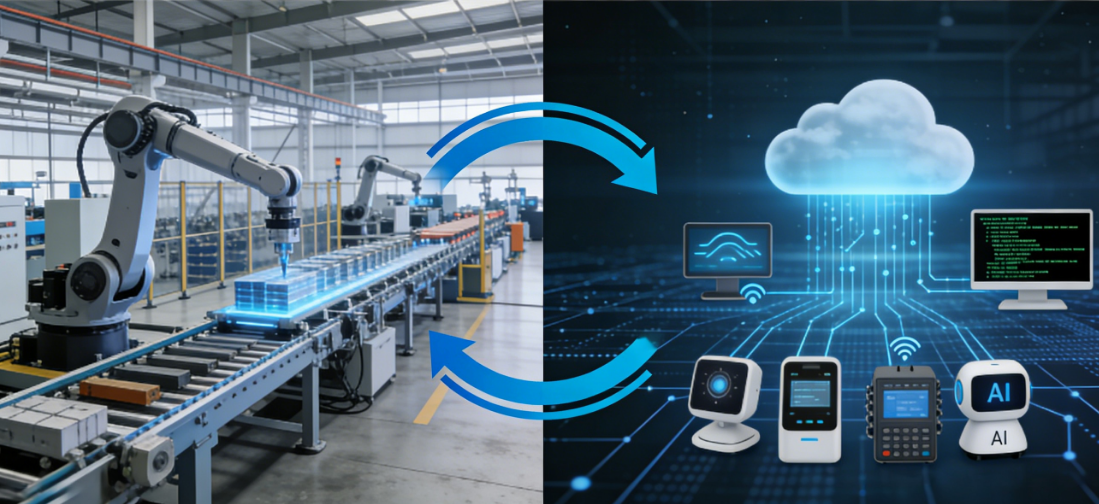
Although "Industry 4.0" is a new concept that has only emerged in recent years, German companies had already begun trying it long before the concept began. At its core, "Industry 4.0" is the fusion of traditional manufacturing technologies and information and communication technologies, making production more flexible, smarter, more interconnected, and more efficient. In this sense, "Industry 4.0" is merely an extension of digital production, which is why more and more industry insiders regard "Industry 4.0" as a form of evolution.
group pointed out in an interview that 'Industry 4.0' did not appear out of nowhere, but is evolving rapidly and continuously in the digital age, with some companies starting digitalization decades ago. At the same time, he believes that "Industry 4.0" differs from the previous three industrial revolutions, which all took place inside factories. "Industry 4.0" will bring transformation to the entire value chain of production. When goods, services, and people are interconnected, productivity across the entire value chain will truly improve.
<p style="box-sizing: border-box; margin-top: 0px; margin-bottom: 10px; padding: 0px; color: rgb(51, 51, 51); font-family: >"Although "Industry 4.0" is not characterized by a single technological breakthrough, the development, sales, and impact of "Industry 4.0" products all have multiple revolutionary characteristics. In the development of "Industry 4.0" solutions, bringing together experts from different fields such as IT and machinery for collaboration is a challenge. At first, a mechanical engineer may not communicate smoothly with the same software engineer, but after collaborating on specific projects, they gradually understand each other. For example, a mechanical engineer may be an expert in grinding technology, but a software engineer may not understand the technology. He might tell the engineer he understands algorithms, might detect abnormal machine vibrations and other indicators, and then use software to optimize the machine's operating status.
The CTO of a German company pointed out in an interview with reporters, "Industry 4.0" The application of technology will bring enterprises advantages in three dimensions. First, "Industry 4.0."
 Ningxia Wuzhong City Kaiyuan Avenue Jinji Industrial Park China Automation Industrial Park
Copy Right ? Wuzhong Instrument Co., Ltd. . All rights reserved Record Number:Ning ICP No. 16000574-3